What My “One-Butt Kitchen” Taught Me About Emotional Triggers
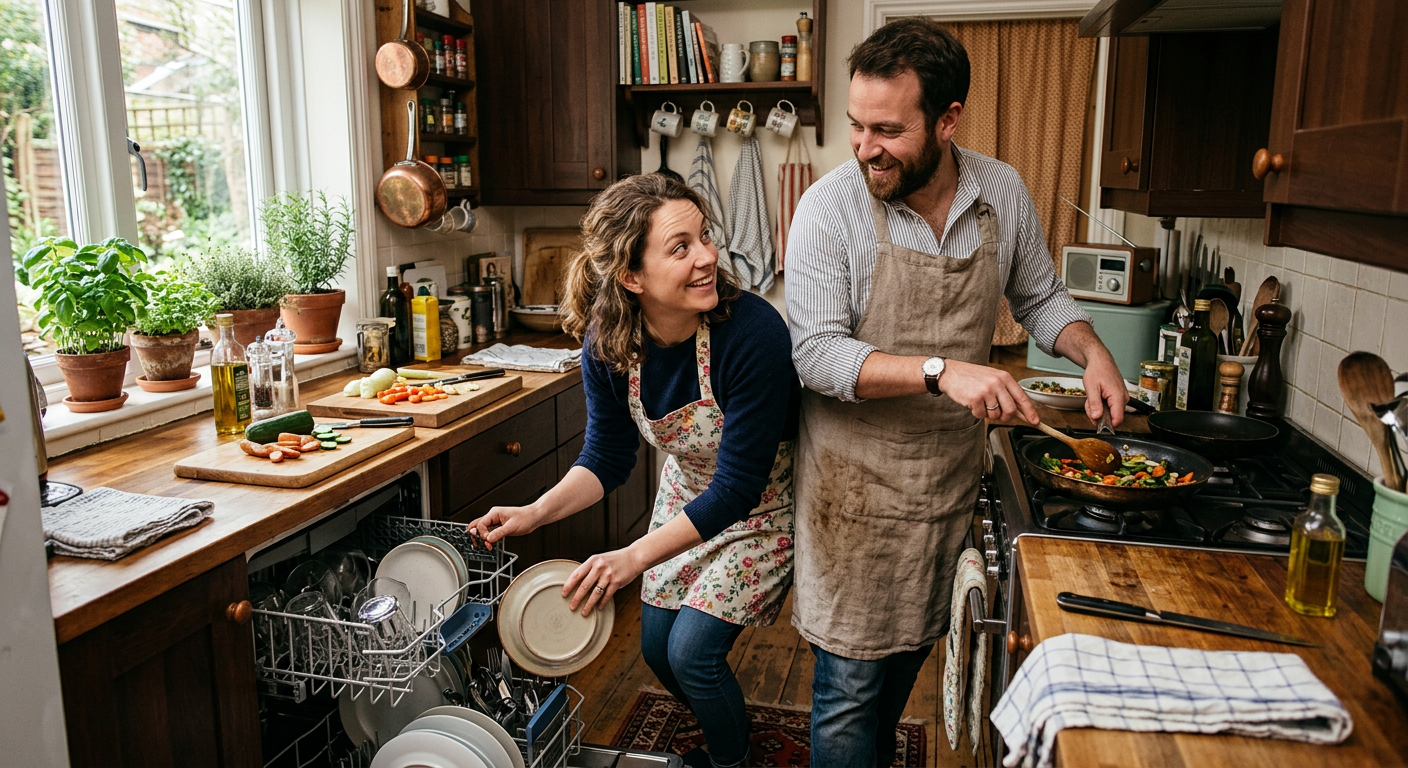
Shortly after my wife Kathy and I moved in together, we discovered something important: our kitchen was too small for both of us.
If I opened the refrigerator and turned toward the counter, I’d have to slam on the brakes to avoid running into her. Other times, I’d be the one in her way. After a few close calls, I started referring to it as our “one-butt kitchen.”
At first, I blamed the layout. The kitchen was small. The traffic flow was bad. Anyone would get irritated.
But the kitchen wasn’t the real issue.
The Moment It Boiled Over
One evening, Kathy was preparing dinner while I loaded the dishwasher. We had already bumped into each other several times, and I could feel irritation quietly building inside me.
I was determined to stay pleasant and loving. Still, a part of me felt annoyed — and blamed her for the congestion.
As I placed a bowl in the dishwasher, Kathy gently mentioned that she preferred it loaded a different way.
Suddenly, I felt a surge of anger.
“I guess I can’t do anything right,” I snapped.
We both froze.
The reaction was bigger than the moment. Bigger than the dishwasher. Bigger than the kitchen.
At the time, I didn’t understand what had just happened. I hadn’t yet learned about Internal Family Systems (IFS) or the concept of “parts.” All I knew was that something in me had taken over.
I apologized. I told her it wasn’t her fault. She didn’t deserve my tone or my blame.
But inside, I felt confused — and ashamed.
Aren’t I Supposed to Be Evolved by Now?
After divorcing my second wife, I spent twelve years working on myself. Therapy. Workshops. Books. Reflection. I was committed to becoming a man who could either attract a kind, loving partner — or be content alone.
I believed I had evolved.
An evolved man doesn’t get angry over something so small… right?
A mentally fit man doesn’t blame others for his irritation… does he?
So what did this outburst mean? Had I not changed after all? Was I still the same reactive man from my past marriages?
The Fear Beneath the Fear
My mind spiraled.
Would Kathy now see me the way she had seen previous partners — thoughtless, selfish, controlling? Would she feel she had to walk on eggshells around me?
Had I really grown?
It was easy to default to a simple cause-and-effect explanation: She corrected me. I got upset. Therefore, she caused my upset.
Without self-awareness, that explanation seems logical. If something happens outside of me and I feel something inside of me, then the outside event must be the cause.
But that explanation is incomplete.
What Was Actually Happening
Over the course of my life, I experienced moments that left emotional residue — moments where I felt criticized, inadequate, or not good enough. The emotional energy of those experiences didn’t simply disappear. It stayed stored in my body.
Every now and then, something in the present activates that stored energy.
When that happens, I don’t just feel mild irritation about a dishwasher. I feel the full emotional charge of the original experience — as if it’s happening now.
My perception shifts instantly. The present moment becomes colored by the past.
It doesn’t matter whether the original wound came from childhood, early adulthood, or last year. When it’s triggered, it feels current and real.
That night in the kitchen, Kathy wasn’t reacting to a bowl. She was speaking to me. But part of me heard something much older: You’re doing it wrong. You’re not good enough.
And that part took over.
The Hard Truth — and the Good News
Here’s the hard truth:
You are responsible for your experience.
That can sound harsh — especially if you believe that your happiness or suffering is determined by other people’s behavior. If you’re waiting for someone else to change so you can feel better, you may be waiting a very long time.
But there’s also good news.
If your emotional reactions are activated from within, then they can be healed from within.
When you learn to recognize your triggers, understand your stored emotional energy, and take responsibility for your internal world, you gain power. You’re no longer at the mercy of a small kitchen — or a dishwasher comment — or another person’s tone.
You can reduce your suffering.
You can improve your relationships.
You can increase your capacity for love.
And sometimes, the greatest growth begins in a one-butt kitchen.
After writing this article, I realized there was more of the story to tell. Check out, “The One-Butt Kitchen: Closing the Loop.”